Algebraic geometry
Analysing the vacuum
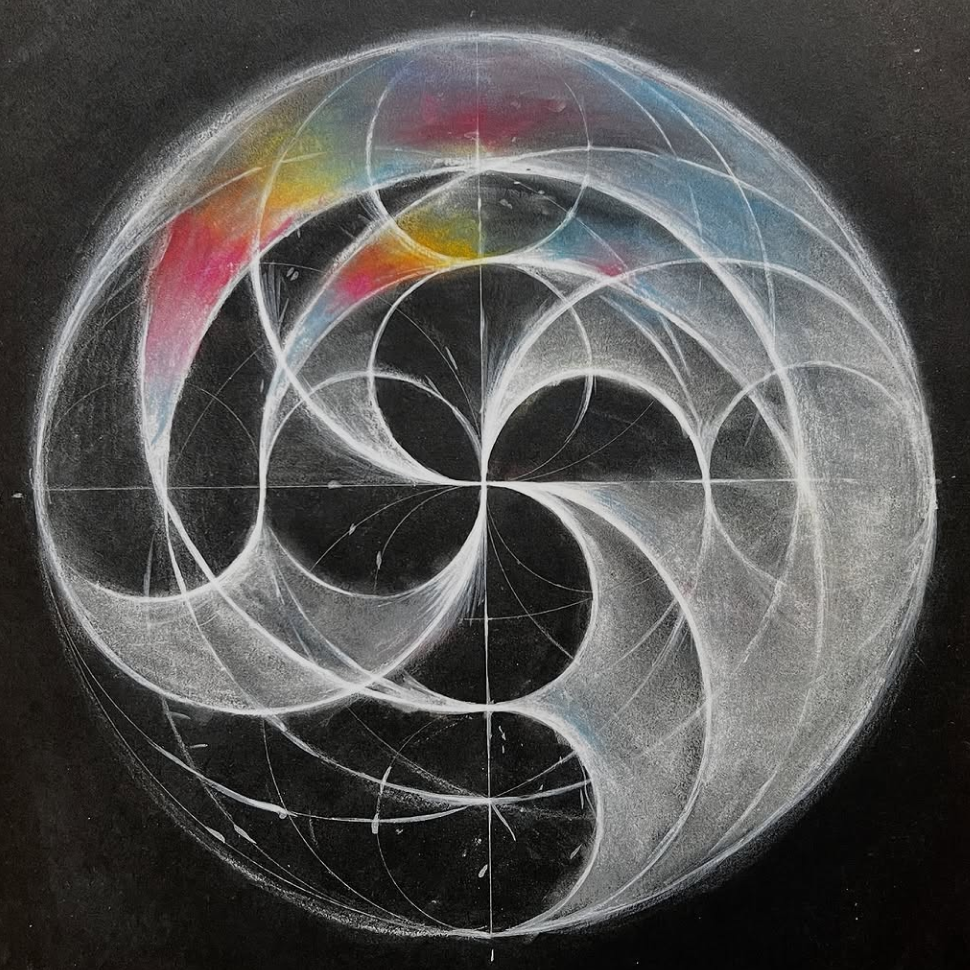
Birational methods in algebraic geometry are used to explicitly describe the vacuum structure of the Minimal Supersymmetric Standard Model.
YH VJBNHSMS
Physical Review DVJBNHSMSThe London Institute’s papers are the official record of our discoveries. They allow others to build on and apply our work. Each one is the result of many months of research, so we strive to make them clear, inspiring and beautiful, and publish them in leading journals.
Birational methods in algebraic geometry are used to explicitly describe the vacuum structure of the Minimal Supersymmetric Standard Model.
VJBNHSMS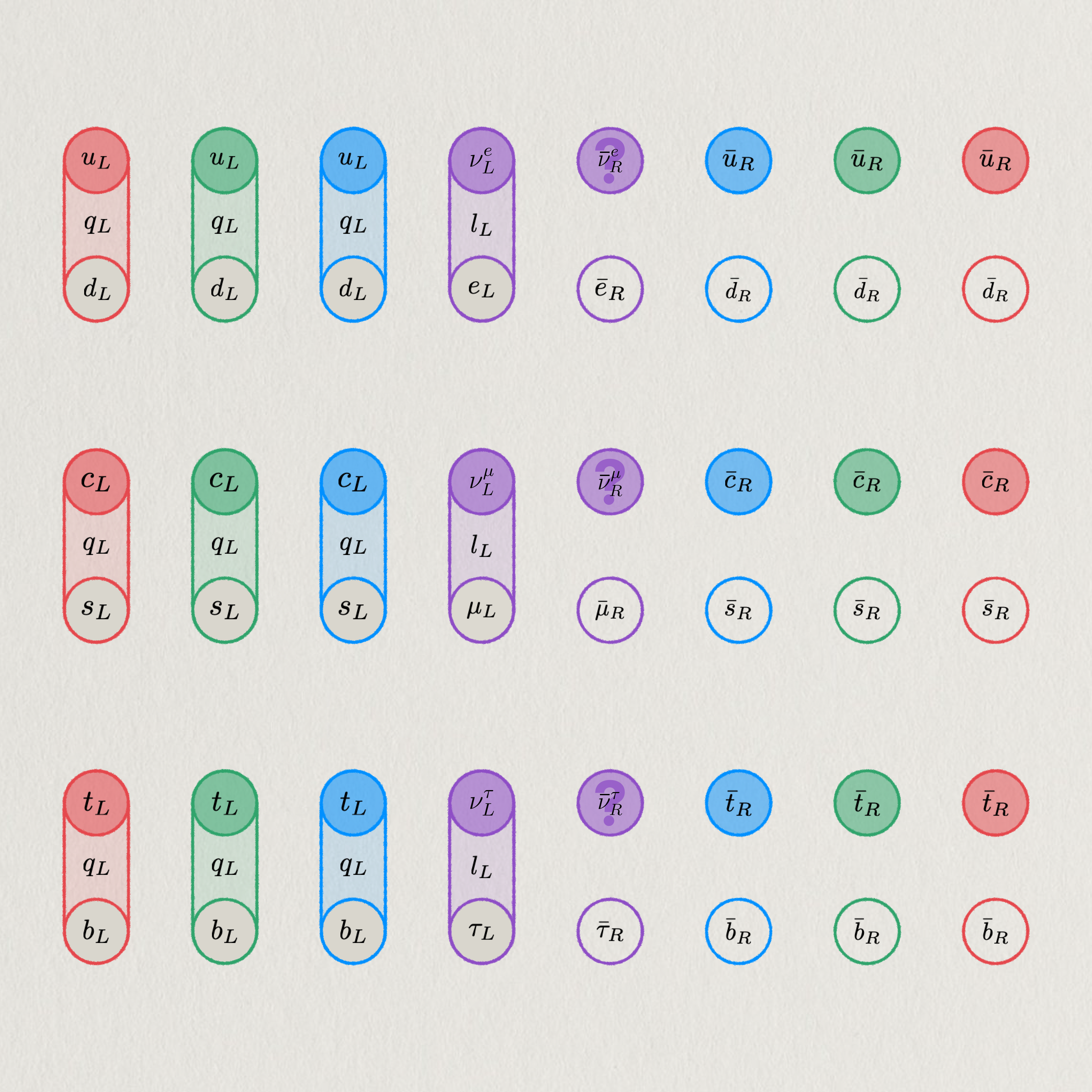
A colour symmetry extension of baryon plus lepton symmetric gapped quantum topological order replaces families of massive sterile neutrinos.
 ZWSY
ZWSY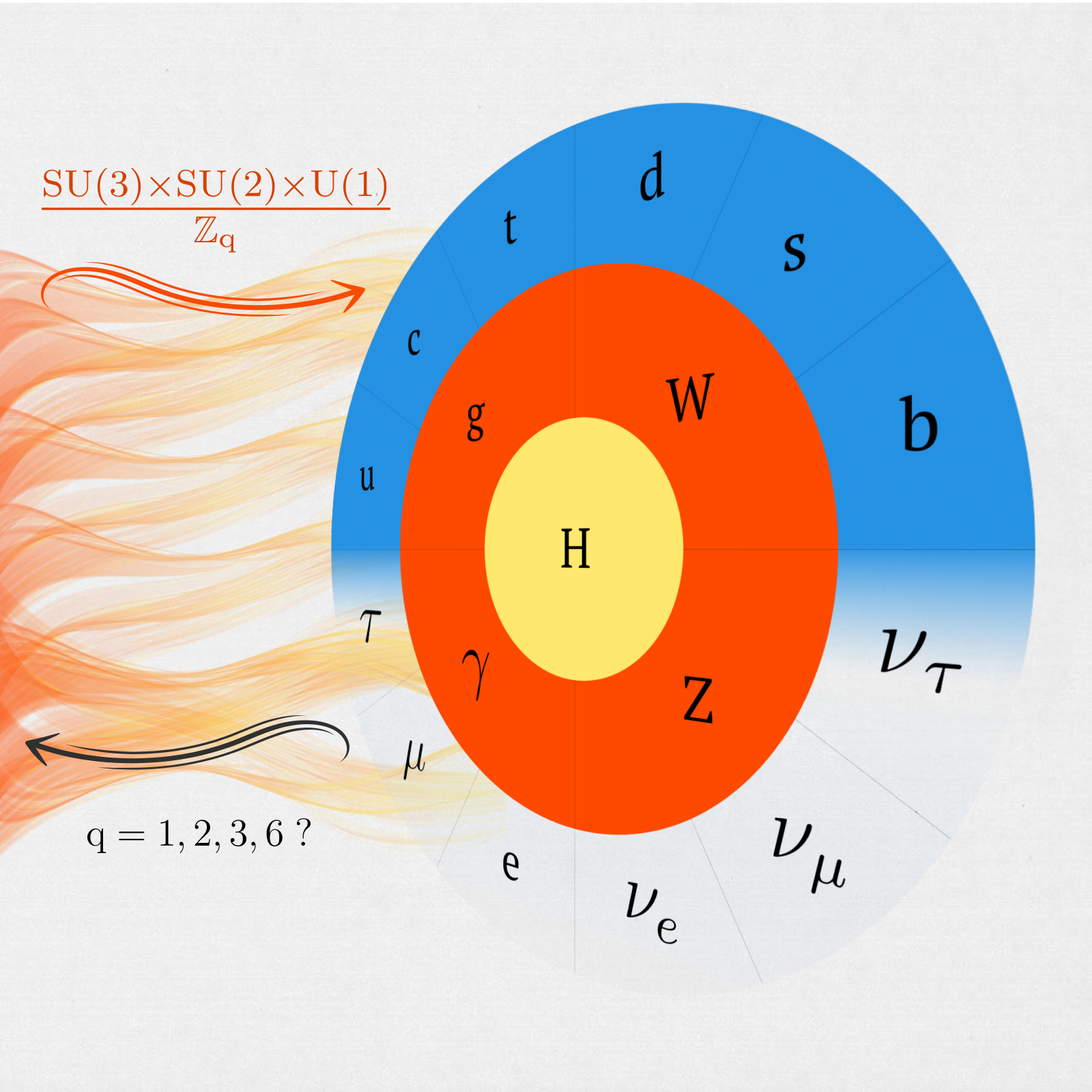
Fractional conductivity between the nuclear and electromagnetic higher symmetries reveals four global Lie gauge groups of the Standard Model.
ZWYY
Sterile neutrinos are replaced by topological order as dark matter candidates to counterbalance the Standard Model’s gravitational anomalies.
Continuous quivers enable exact Wilson loop calculation, reveal an emergent dimension, and raise tantalising questions on dual strings.
Gravitational anomalies causing baryon and lepton number violation in the Standard Model are resolved using new fermionic topological orders.
We demonstrate that the Standard Model's baryon minus lepton symmetry defect can become categorical by absorbing the gravitational anomaly.
Inconsistencies between two approaches to deriving beta functions in two-dimensional sigma models are resolved by adding heavy superpartners.
Unsupervised machine-learning of the Hodge numbers of Calabi-Yau hypersurfaces detects new patterns with an unexpected linear dependence.
The number of particles in a higher derivative theory of gravity relates to its effective mass scale, which signals the theory’s viability.