Statistical physics
Deep-layer distribution
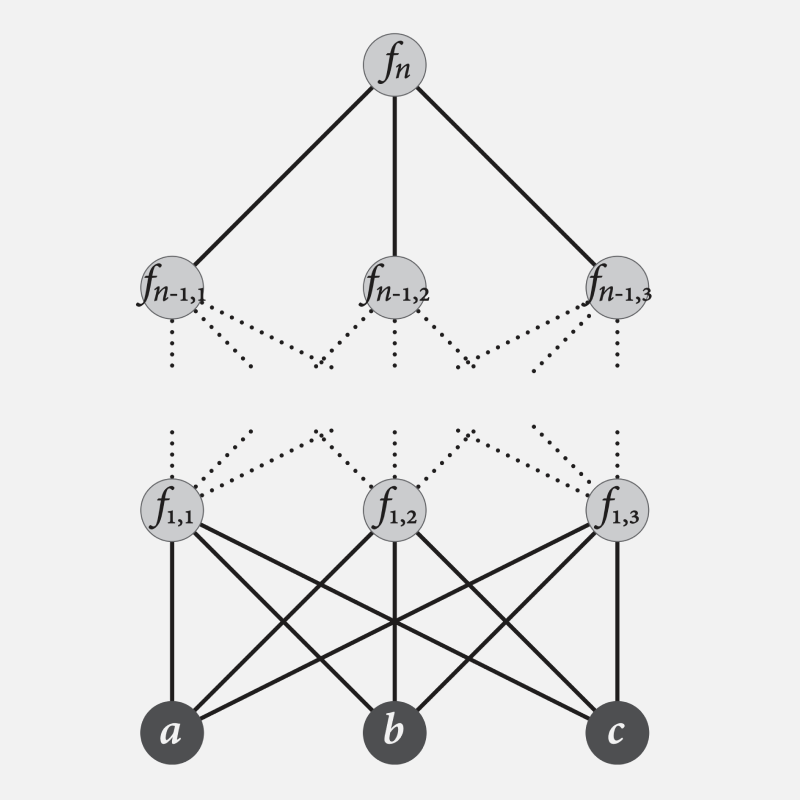
The output distribution of a deep-layered machine with random logics exhibits a critical network depth, at which it is maximally biased.
TF
ArXivThe London Institute’s papers are the official record of our discoveries. They allow others to build on and apply our work. Each one is the result of many months of research, so we strive to make them clear, inspiring and beautiful, and publish them in leading journals.
The output distribution of a deep-layered machine with random logics exhibits a critical network depth, at which it is maximally biased.
We give a theory for the output of deep-layered machines and show that, as the network depth increases, it is biased towards simple outputs.
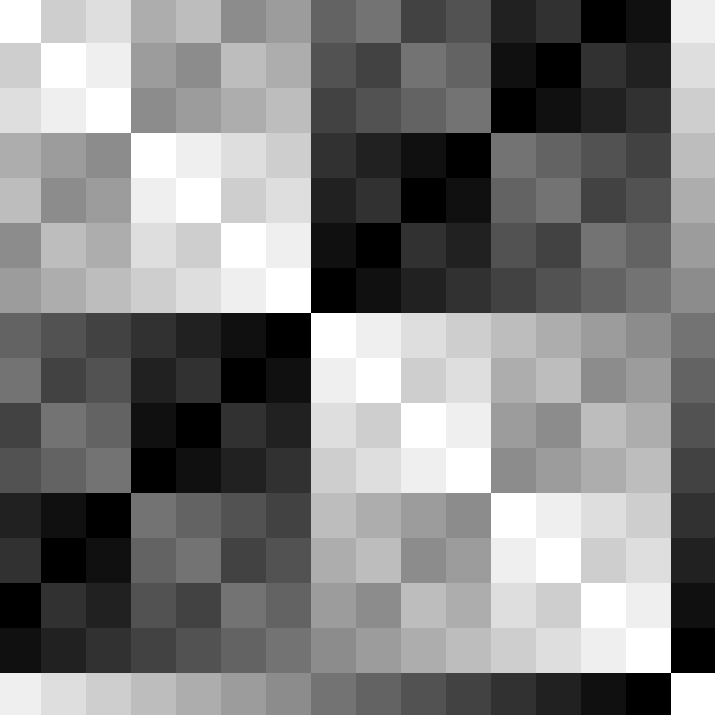
The dynamics of the Kauffman network can be expressed as a product of the dynamics of its disjoint loops, revealing a new algebraic structure.
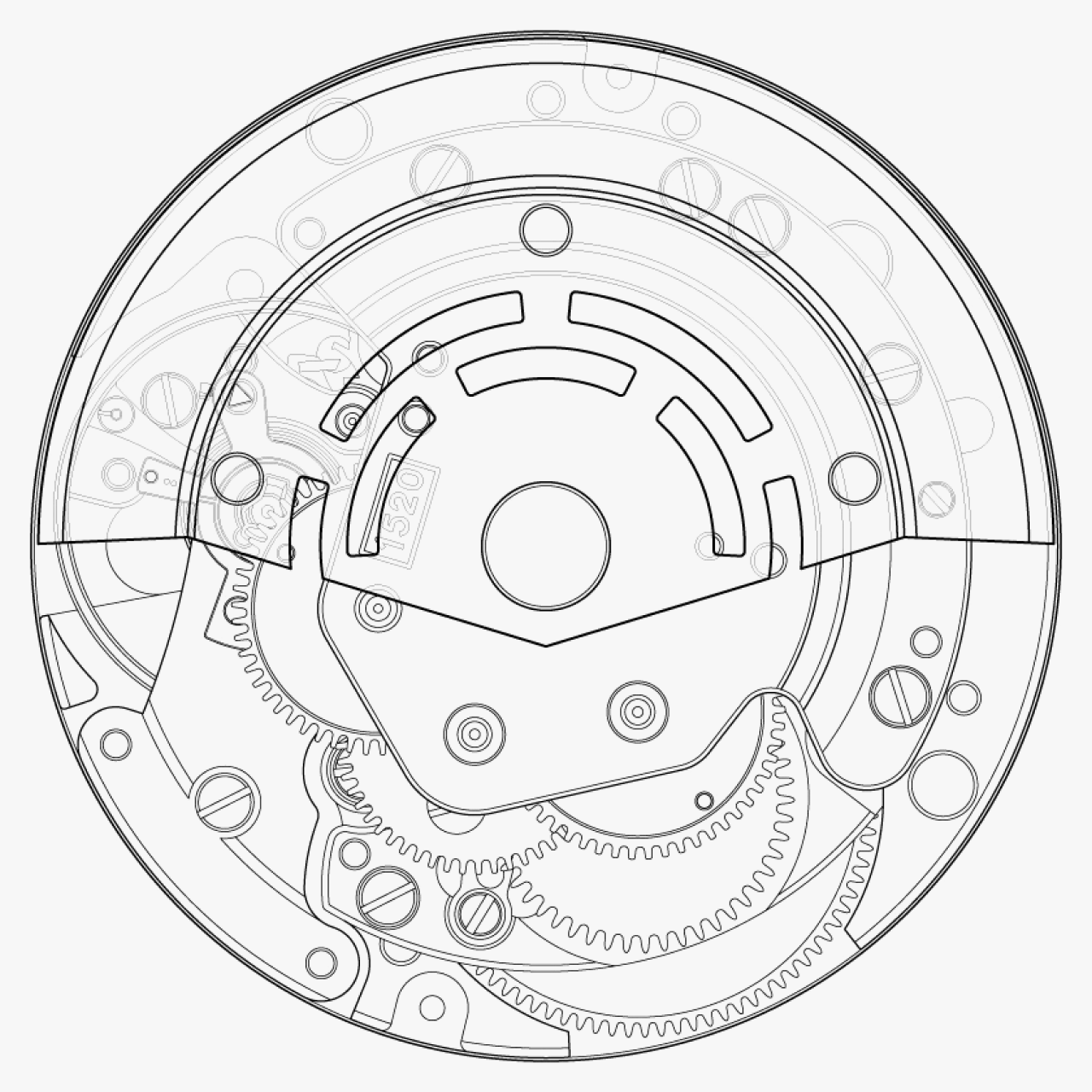
The bipartite nature of regulatory networks means gene-gene logics are composed, which severely restricts which ones can show up in life.
RH
Insights from number theory suggest a new way to solve the critical Kauffman model, giving new bounds on the number and length of attractors.
The structural and functional building blocks of gene regulatory networks correspond, which tell us how genetic computation is organised.
Three new closed-form expressions give the number of recursive divisors and ordered factorisations, which were until now hard to compute.
Surprisingly, the number of attractors in the critical Kauffman model with connectivity one grows exponentially with the size of the network.
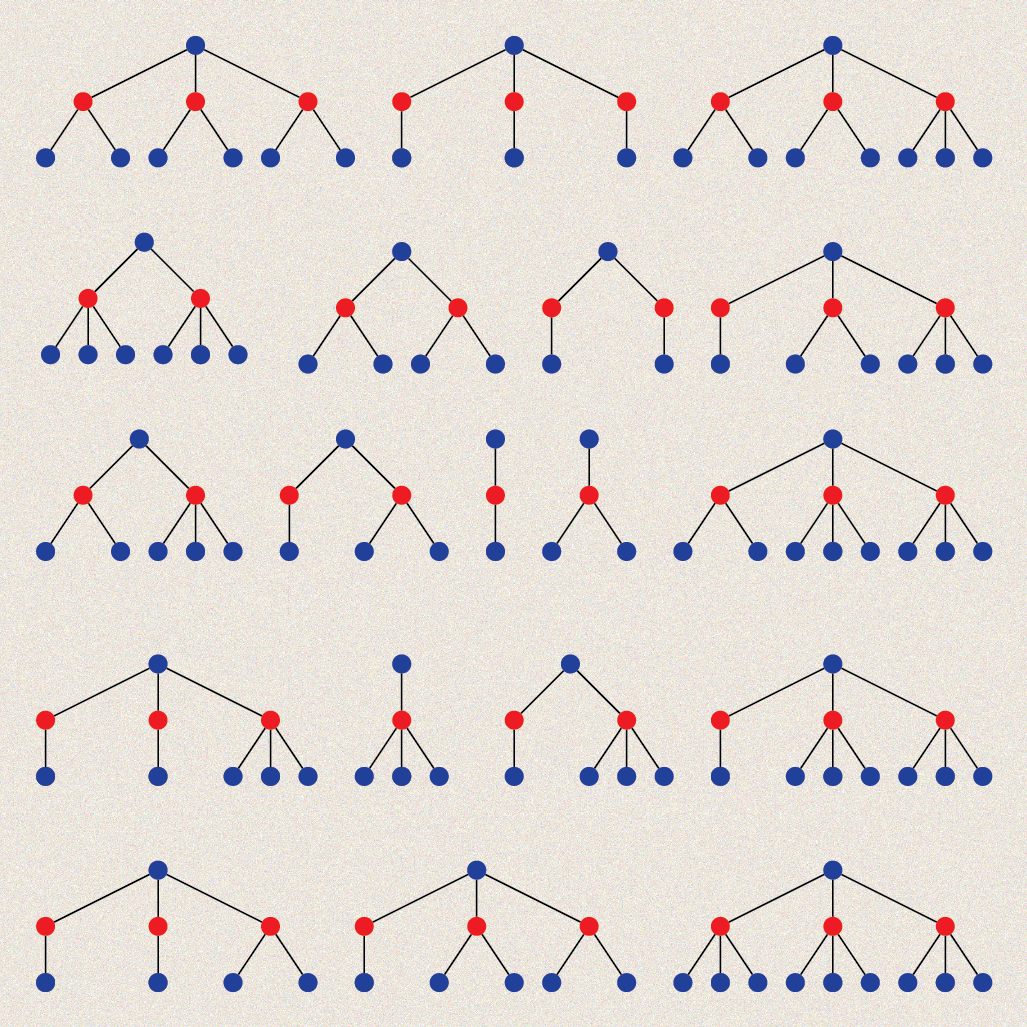
Recursively divisible numbers are a new kind of number that are highly divisible, whose quotients are highly divisible, and so on, recursively.
The recursive divisor function has a simple Dirichlet series that relates it to the divisor function and other standard arithmetic functions.
Parallels between the perfect and abundant numbers and their recursive analogs point to deeper structure in the recursive divisor function.
The eigenvalues of the mortality equation fall into two classes—the flower and the stem—but only the stem eigenvalues control the dynamics.
The mortality equation governs the dynamics of an evolving population with a given maximum age, offering a theory for programmed ageing.
Insights from biology, physics and business shed light on the nature and costs of complexity and how to manage it in business organizations.
A theoretical model of recursive innovation suggests that new technologies are recursively built up from new combinations of existing ones.
A phase transition creates the geometry of the continuum from discrete space, but it needs disorder if it is to have the right metric.
The distribution of product complexity helps explain why some technology sectors tend to exhibit faster innovation rates than other sectors.
The usefulness of components and the complexity of products inform the best strategy for innovation at different stages of the process.
In systems of innovation, the relative usefulness of different components changes as the number of components we possess increases.
Firms can harness the shifting importance of component building blocks to build better products and services and hence increase their chances of sustained success.
The structural properties of a network motif predict its functional versatility and relate to gene regulatory networks.
The principal eigenvalue of small neutral networks determines their robustness, and is bounded by the logarithm of the number of vertices.
When networks come under attack, a repairable architecture is superior to, and globally distinct from, an architecture that is robust.
A new concept, graph temperature, enables the prediction of distinct topological properties of real-world networks simultaneously.
Information theory fixes weighted networks’ degeneracy issues with a generalisation of binary graphs and an optimal scale of link intensities.
The information needed to self-assemble a structure quantifies its modularity and explains the prevalence of certain structures over others.
Of the 256 elementary cellular automata, 28 of them exhibit random behavior over time, but spatio-temporal currents still lurk underneath.
In single elimination competition the best indicator of success is a player's wealth: the accumulated wealth of all defeated players.