Georgi–Glashow Prize
The London Institute is establishing an annual prize of £500 for the best collaborative research paper written by two or more of its members.
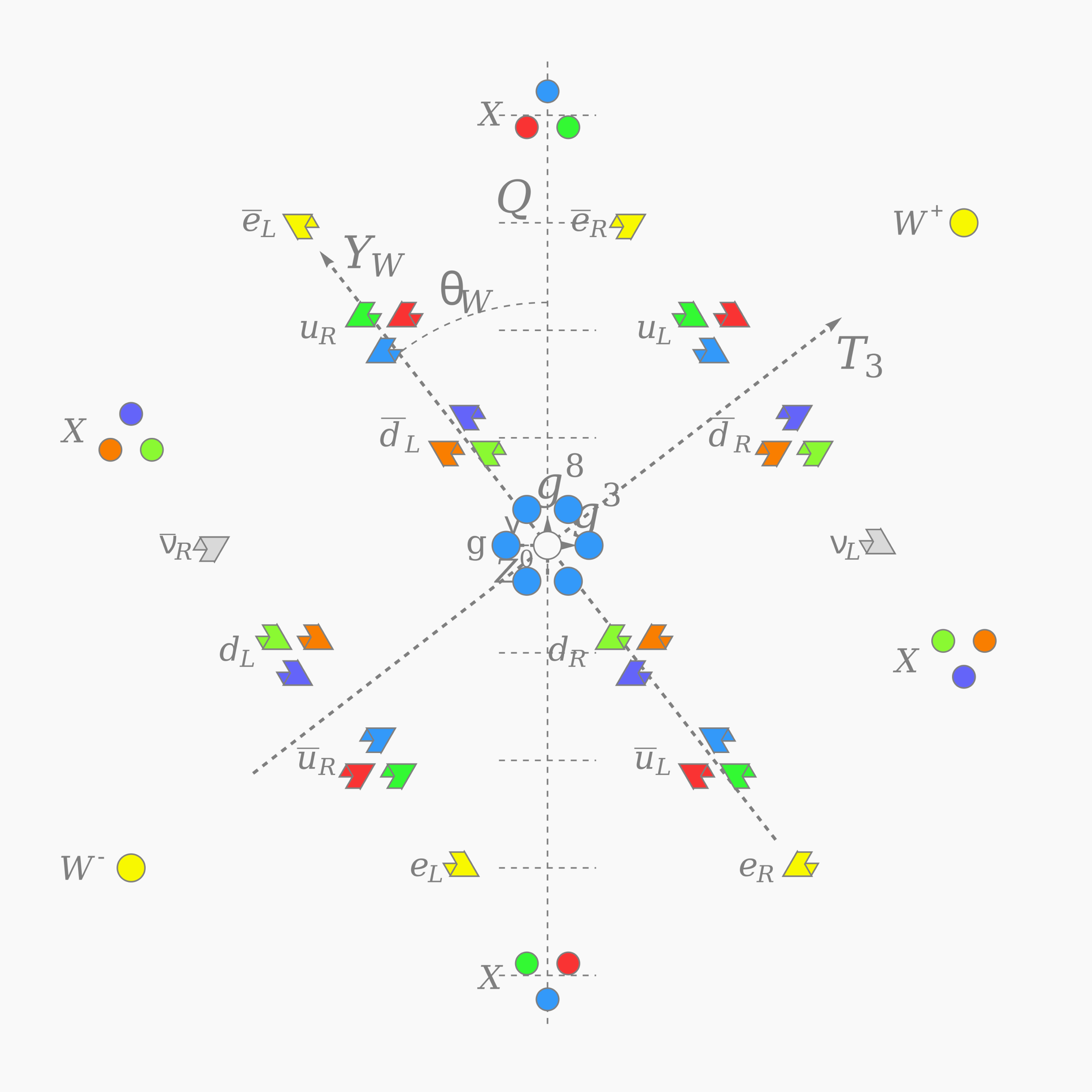
Some scientific ideas are too large for one mind. In 1974, Harvard physicists Howard Georgi and Sheldon Glashow published “Unity of all elementary-particle forces” in Physical Review Letters, a paper proposing that the strong, weak and electromagnetic forces arise from a single underlying interaction. Their SU(5) theory was one of the first grand unified theories: a bold attempt to show that the apparent variety of nature may be the broken form of a simpler whole.
At most research centres, scientists collaborate much more with people outside the organisation than inside it. But internal collaborations bring many benefits. They strengthen organisational culture and encourage mission-driven, as opposed to person-led, research. They also tend to move faster and, thanks to our team of in-house science writers, reach a wider audience.
We are establishing the Georgi–Glashow Prize for the best paper published in a peer-reviewed journal and written by two or more members of the London Institute, excluding junior scientists and their supervisors. It is an annual prize of £500, awarded at the end of the year.
You can learn about our Conway Prize for the best short paper written by a member of the Institute here.
LCP